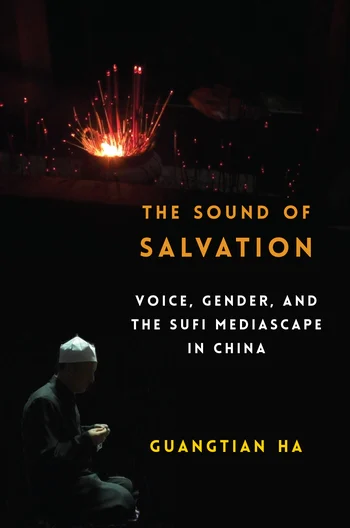

The Sound of Salvation: Voice, Gender, and the Sufi Mediascape in China
Document Type
Book
Role
Author
Publisher
Columbia University Press
Publication Date
2022
Abstract
The Jahriyya Sufis—a primarily Sinophone order of Naqshbandiyya Sufism in northwestern China—inhabit a unique religious soundscape. The hallmark of their spiritual practice is the “loud” (jahr) remembrance of God in liturgical rituals featuring distinctive melodic vocal chants. The first ethnography of this order in any language, The Sound of Salvation draws on nearly a decade of fieldwork to reveal the intricacies and importance of Jahriyya vocal recitation. Guangtian Ha examines how the use of voice in liturgy helps the Jahriyya to sustain their faith and the ways it has enabled them to endure political persecution over the past two and a half centuries. He situates the Jahriyya in a global multilingual network of Sufis and shows how their characteristic soundscapes result from transcultural interactions among Middle Eastern, Central Asian, and Chinese Muslim communities. Ha argues that the resilience of Jahriyya Sufism stems from the diversity and multiplicity of liturgical practice, which he shows to be rooted in notions of Sufi sainthood. He considers the movement of Jahriyya vocal recitation to new media forms and foregrounds the gendered opposition of male voices and female silence that structures the group’s rituals.
Suggested Citation
Ha, G. (2022). The Sound of Salvation: Voice, Gender, and the Sufi Mediascape in China. (Columbia University Press)